 Content Monetization
 SelfyClub Home
 Matrimony
 Laaya
 Contests
 SelfyClub OTT
 Wedding Mall
 SelfyClub Stream
 SelfyClub Ads
 Affiliate Program
 Your Tube
 Multicab


Entering the software development field requires more than learning a programming language. Aspiring professionals must decide which technical skills will help them achieve their career objectives. Two popular learning options are full stack development and technology specialization. Full stack development introduces learners to frontend and backend programming, database management, and application integration. Specialization focuses on developing advanced knowledge in a particular area, such as frontend engineering or backend development. Both approaches can create valuable career opportunities, but they differ in learning scope and professional responsibilities. Understanding these differences can help learners choose a suitable direction. Those interested in gaining knowledge across multiple web development technologies can explore Full Stack Training in Chennai.
1. Comparing the Learning Scope of Both Development Paths
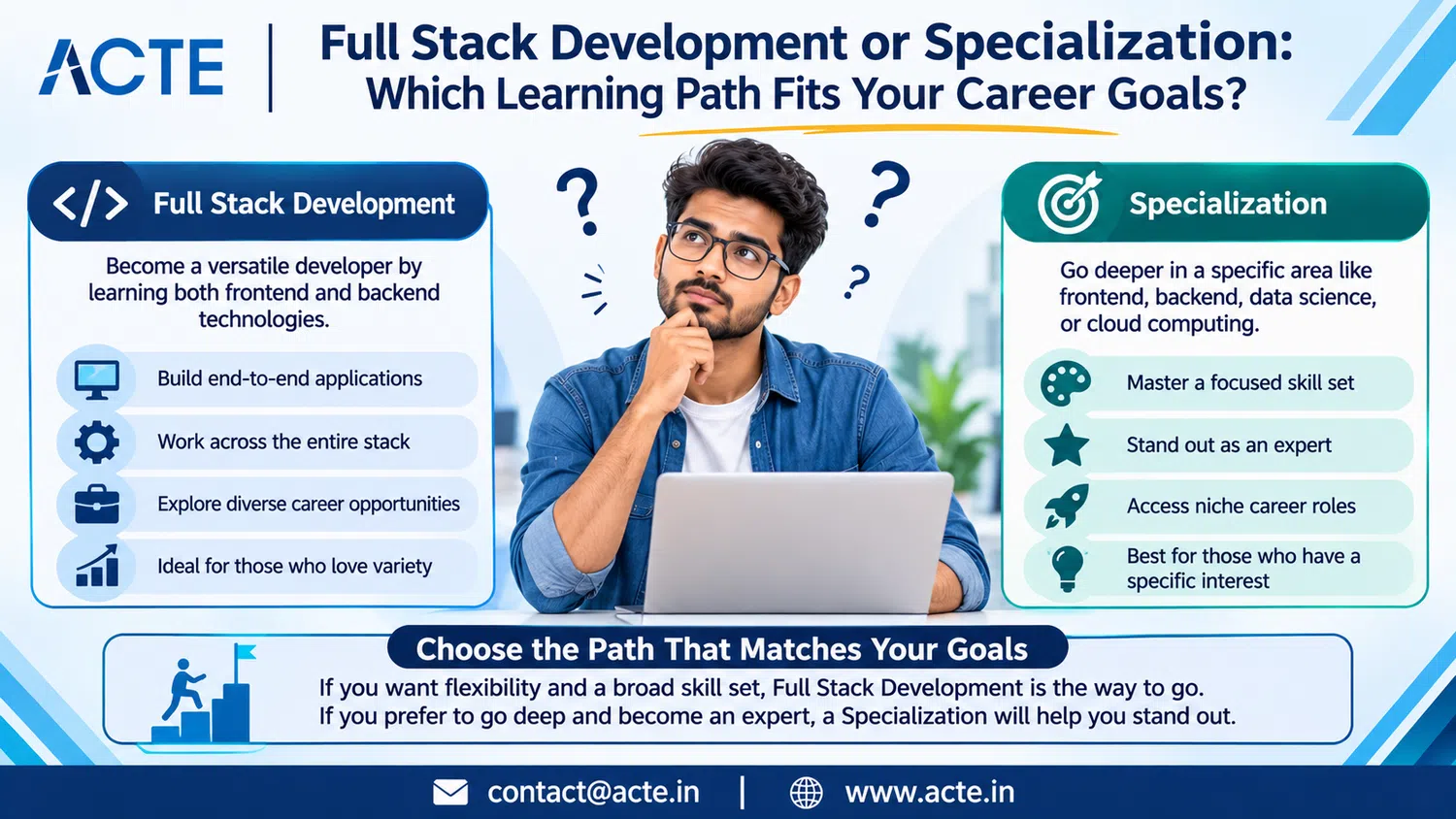
Full stack development provides a broad understanding of how modern web applications are designed and developed. Learners explore frontend interfaces, backend services, database connections, and communication between application components. This knowledge helps developers understand the complete structure of a software product. Specialization offers a more focused learning experience by concentrating on one technical area. A frontend developer primarily works on website appearance, navigation, and interactive features, whereas a backend developer manages server-side functionality, data processing, and application logic. Full stack learning is suitable for those who prefer working across different technologies, while specialization benefits individuals who want to develop expertise in a specific domain.
2. Acquiring the Core Technologies Needed for Full Stack Careers
Full stack development requires knowledge of several technologies that support different stages of application creation. HTML, CSS, and JavaScript are essential for building website structures, designing layouts, and implementing interactive features. React helps developers create modern user interfaces, while Node.js and Express.js are used for backend programming. Database platforms such as MongoDB and MySQL support information storage and retrieval. Developers should also understand REST APIs, Git, debugging, testing, and application deployment. Learning these technologies together helps individuals develop complete web solutions. Full Stack Developer Training in Bangalore can help learners build familiarity with these tools and understand their role in professional development projects.
3. Why Choosing a Specialized Technology Can Be Beneficial
Specialization allows learners to invest more time in understanding a particular technology and its advanced applications. This approach is useful for individuals who have identified the development area they enjoy most. Frontend specialists can concentrate on React, JavaScript, responsive layouts, accessibility, and website performance. Backend specialists can develop expertise in database design, server architecture, API integration, and application security. Focused learning helps professionals understand complex technical requirements and improve their ability to solve domain-specific problems. It can also create a clear career direction for individuals who want to become experts in a particular development discipline.
4. Evaluating Career Opportunities in Different Development Domains
The software industry offers several job opportunities for both full stack developers and specialized professionals. Individuals with full stack knowledge can pursue roles such as Full Stack Developer, Web Developer, Software Engineer, and Application Developer. Their understanding of multiple technologies can help them contribute to different stages of application development. Specialized learners can explore positions such as Frontend Engineer, React Developer, Backend Developer, API Developer, and Database Specialist. The right role depends on technical proficiency, practical experience, project knowledge, and company requirements. Reviewing the responsibilities and qualifications associated with different positions can help learners select a career path that matches their ambitions.
5. Identifying the Learning Path That Matches Your Professional Interests
Personal interests should play a major role when deciding what development skills to learn. Individuals who enjoy designing website interfaces, improving user interactions, and creating responsive layouts may prefer frontend development. Those who like logical programming, server operations, and data management may find backend development more suitable. Full stack development is a good option for learners who want to understand how an entire application functions. Beginners who are unsure about their preferred domain can experiment with basic frontend and backend technologies before making a decision. Through Full Stack Developer Training in Hyderabad, learners can explore different development concepts and understand how they are connected in real applications.
6. Using Practical Projects to Improve Technical Competence
Practical experience is essential for developing confidence and preparing for software development responsibilities. Projects allow learners to apply programming knowledge, connect different technologies, troubleshoot errors, and build working applications. Full stack learners can develop e-commerce platforms, online learning portals, job search applications, and inventory management systems. These projects provide experience in frontend interfaces, backend functionality, databases, and APIs. Specialized developers can create projects that highlight their individual strengths, such as interactive dashboards, responsive websites, database applications, or secure backend services. Maintaining a portfolio of completed projects can help candidates demonstrate their abilities and provide practical examples during job interviews.
7. Preparing for Career Advancement Through Skill Improvement
Technology continues to evolve, and software professionals must regularly update their knowledge to remain competitive. New frameworks, cloud technologies, programming tools, and development practices influence how applications are built and maintained. Full stack developers can improve their career prospects by gaining advanced knowledge in selected technologies while retaining their understanding of the entire application structure. Specialized developers can strengthen their expertise by learning related tools and expanding their technical capabilities. Continuous learning and professional experience may create opportunities to advance into senior developer, technical lead, software architect, and engineering management positions. Learners who want to develop a strong foundation across web development technologies can explore Full Stack Developer Training.
Conclusion:
Full stack development and specialization offer different routes toward a career in the software industry. Full stack development provides knowledge across multiple application technologies, while specialization helps individuals gain deeper expertise in a particular technical area. The most appropriate choice depends on personal interests, existing skills, preferred job responsibilities, and future career objectives. Beginners can explore different development domains before selecting a direction, while experienced professionals can build advanced expertise or expand into additional technologies. Regardless of the chosen approach, practical project experience, strong programming fundamentals, and continuous skill development remain essential for long-term professional success.


